Heavenly Homemakers

Encouraging women in homemaking, healthy eating and parenting

  • Home
    • About
    • FAQs
  • Recipes
    • Bread and Breakfast
    • Condiments
    • Dairy
    • Main Dishes
    • Side Dishes and Snacks
    • Desserts
    • Gluten Free
    • Instant Pot
    • Crock Pot
    • Heavenly Homemaker’s Weekly Menus
  • Homemaking
    • Real Food Sources
  • Store
  • Contact
    • Advertise
    • Disclosure
    • Privacy Policy
  • Simple Meals
  • Club Members!

But Do You Need It?

March 18, 2014 by Laura 9 Comments

This post may contain affiliate links. For more information, please see our disclosure policy.

Recently, our two youngest boys came to me very excited. Something they wanted was on sale – today only! They had discussed it at length (a solid five minutes, I’m sure) and decided that they would like to pool their money to purchase it. They eagerly asked me if it was okay.

armor_1

See how studious these two are, always sitting still,
focused while carefully writing scripture? Mmmhmmm.

I had mixed feelings. The boring mom in me knew that they definitely didn’t need the item. But the fun mom in me knows it’s okay to spend a little money on fun sometimes. Our boys are all very good savers. They rarely spend their hard earned money or birthday money, and in fact, they rarely even ask to spend it. I knew that since they were asking, and since they’d already discussed how to go in on it together, the purchase was important to them.

So, the non-decisive mom in me said, “Let’s talk to Dad and see what he thinks.” Then the practical mom in me asked a thought provoking question:

If this item wasn’t on sale, would you still want it this badly? Or do you just think you want it because it’s on sale today?

It started a great discussion, which of course ended with the boys asking, “um, so can we buy it?” Clearly, I had been able to make my nine and twelve year old think deeply, and offered them life-lessons that they’ll take with them long into adulthood.

After talking it over with Dad, we came to the decision that since it was such a huge discount, and only totaled $5, their purchase sounded like a fun idea this time. While five dollars doesn’t sound like a big deal, and while it might seem that our dilemma and discussion was silly over such a small amount – we feel that every financial decision needs to be talked through, especially at their ages. Throwing money at this and that is a great way to end up with an empty wallet. We felt it was important to take advantage of that teachable moment.

So how about we adults? What factors into our decisions as we decide what to spend our money on? Do you frequently make impulse purchases, buying something that is on sale whether you need it or not?

We’ve been talking recently about budgeting and the envelope system as we all work together to let Budget Focus get our finances on track. I’d love to hear what helps you process your spending decisions. Also, I’d love to hear from those of you who have taken advantage of the free 14-day trial at Budget Focus. Have you plugged in all your numbers into their simple budgeting and online envelope system? I encourage you all to check out what Budget Focus has to offer. You can try it for free, and their pricing packages are worth paying for as a way to help you get your budget organized and running smoothly.

How do you help your kids make a purchasing decision?

Heavenly Homemaker's Club Members: Access your homepage and all your fantastic resources here! Not a member yet? Please join us!

Real Food – Low Cost Challenge Link-Up!

February 8, 2012 by Laura 13 Comments

This post may contain affiliate links. For more information, please see our disclosure policy.

As we reach the end of this Real Food – Low Cost Challenge, I have concluded that if you are ever wondering if you’re spending too much on healthy food – do a price break down. It’s a bit of a headache. It might make you a little crazy (or maybe that was just me having issues). But the effort is worth it. To learn that most of my real food recipes can be prepared for an average of $1.00 per person – that was very encouraging to me!

To finish up the cost break down on the remaining items on the challenge list, I’ll let you know that Italian Pasta Bake costs about $8.85 to make, breaking down to $1.48/person in my family.

Cheddar Ranch Burgers came in at $11.93 for eight burgers – $1.49 per burger. Not super cheap, but made with the finest ingredients and very filling. Throw some veggies in and we’ve got a complete meal for around $2.00 a person.

But enough about my recipes and the costs that come with them. I’ve been very anxious for today to come so that you would have an opportunity to share some of your favorite real food recipes that are low in cost. Help me prove that eating healthy does not have to be expensive!!!

If you have a blog, and have some Real Food – Low Cost recipes to share with us, link them up with us here. Be sure to link back to this post so that your readers know where to find more healthy recipes! If you don’t have a blog, please feel free to post your recipes in the comments section of this post. If you care to share the cost break down of your recipes – even better!

Let the Real Food – Low Cost Challenge Recipe Sharing begin!

Heavenly Homemaker's Club Members: Access your homepage and all your fantastic resources here! Not a member yet? Please join us!

8 Tips for Feeding Your Family Whole Foods on a Budget (Plus a Giveaway for “The Money Saving Mom’s Budget”!)

January 11, 2012 by Laura 1,064 Comments

This post may contain affiliate links. For more information, please see our disclosure policy.

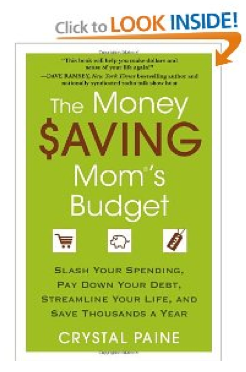
This is a guest post written by Crystal Paine, from Money Saving Mom. Be sure not to miss our giveaway below this post for Crystal’s new book The Money Saving Mom®‘s Budget.

Many people have this misguided idea that it is impossible to feed your family a whole foods on a budget. If you live in Alaska or some remote part of the country, this may be the case, but in most areas, you can feed your family natural, unprocessed foods without spending hundreds of dollars each week to do so.

Sure, you might spend a little bit more than someone who is eating a diet composed mostly of processed foods, but it really doesn’t have to cost you an arm and a leg as some people will make you
think–especially if you’re willing to get creative and think outside the box.

Now, let me be upfront and tell you that our weekly meal plans probably wouldn’t win us the Healthiest Family of the Year award. We eat some processed foods (though we do make the majority of our food from scratch), we like sweets and we certainly do not eat 100% organic.

I know some people are really bothered by this, but we strive to have a balance of serving lots of fresh fruits, veggies and whole grains while still enjoying the occasional brownies and ice cream or even letting our children have a Happy Meal every now and then (gasp! Can you believe it?!)

So, despite the fact that I’m not the most knowledgeable and experienced person to be tackling this issue, here are some suggestions:

1. Plan a Menu Based Upon What is In Season and On Sale

If you want to feed your family on a budget, you need to have a plan for what you’ll be eating. If you can make your menu plan mostly based upon what is on sale at the natural foods store, what is in season at the Farmer’s Market and/or what you’re reaping in abundance from your garden, you’re going to significantly reduce your grocery bill.

2. Practice the “Buy Ahead” Principle

If you happen to come upon an incredible sale on tomatoes at the Farmer’s Market, or the health food store has organic frozen vegetables on a great sale, stock up. Buying items you routinely use when
they are at their lowest price is another surefire way to savings.

3. Plant a Garden (Or Barter With Someone Who Does!)

If you can pull it off, plant a garden. Produce is typically only pennies per item from your own backyard, it’s tremendously fresh and you know exactly what you did or didn’t spray on it. Plus, you can can or freeze your extras–or bless your friends and neighbors with them!

Have a brown thumb? Find a friend who loves gardening and trade services (babysitting, breadbaking, car maintenance?) in exchange for their garden excess.

4. Stick With Simple Meals Using Inexpensive Ingredients

When you’re planning your menu, think about how much your recipes will cost you to make. It doesn’t have to be a scientific to-the-penny figure, but just having a good idea that there is a $10 difference between the price of making one meal as opposed to another meal can help you decide whether you can afford to make something or perhaps should save it for a special occasion.

5. Serve Meat as a Condiment

I shamelessly stole this idea from Family Feasts for $75 Per Week because it’s so brilliant. Serving meat in soup or on pizza is going to be a lot less expensive than serving roast and sirloin,
especially if you’re buying high-quality meat.

Need ideas? Laura shows you how to make six meals out of one chicken.

6. Buy in Bulk

It is usually much more cost-effective to purchase meat and staple ingredients in bulk. Call around to local farmers and see what they would charge you for purchasing half a cow. In many cases, it’s at
least $1 cheaper per pound to purchase in bulk. Buying grains, beans, as well as many other basic ingredients with long storage lives in large quantities will almost always save you at least 20%, if not more.

Costco, as well as many bulk foods stores and local co-ops, offer great pricing. You can also check with your local health food store to see if they’d offer you a discount for bulk purchases.

7. Consider Joining a CSA or Co-Op

If there is a co-op or CSA in your area, check into pricing and details for joining. You might find that it is an affordable and money-saving option for your family. If you can’t find an affordable co-op in your area, you could consider starting your own co-op.

8. Use Coupons on Non-Food Items

I know a number of my readers don’t eat processed foods, but they use coupons to save money on toilet paper, toothbrushes and other non-food items which they purchase. Your savings might not be so exciting as others who use dozens of coupons each shopping trip, but even saving $5 each week by using coupons can start to add up over time.

Crystal Paine is a wife, homeschool mom to three, self-proclaimed minimalist, lover of dark chocolate and good coffee (those can be “healthful” in moderation, right?) and wannabe runner. For practical help and inspiration to get your life and finances in order, check out her blog, MoneySavingMom or purchase a copy of her brand-new book, The Money Saving Mom®‘s Budget.

Interested in winning a copy of Crystal’s new book, The Money Saving Mom®‘s Budget? They’ve offered to give away five copies! Leave a comment on this post for a chance to win. I’ll draw five random winners on Monday, January 16. Please watch for a post stating the winner as you will be responsible for contacting me if your name is chosen!

Heavenly Homemaker's Club Members: Access your homepage and all your fantastic resources here! Not a member yet? Please join us!

How We Afford Buying in Bulk

July 10, 2011 by Laura 24 Comments

This post may contain affiliate links. For more information, please see our disclosure policy.

I’m working through a series on buying whole foods in bulk!
If you haven’t read them yet, you may be interested in :

Why I Buy in Bulk, Buying in Bulk:  Do You Have the Space? and
Buying in Bulk:  A Year’s Supply. And now:  How To Afford Buying in Bulk:

Guess what? Last Thursday was Maple Syrup Day! We now have five gallons of maple syrup to last us the year:

The total price tag wasn’t small, and yet, we got an excellent price per ounce on high quality maple syrup for our family. This means that even though we had to pay quite a bit upfront, we just saved quite a bit of money!

I’m sure many of you are wondering how we afford to purchase our year’s supply of maple syrup all at once, or three months worth of meat at one time, etc. Hopefully you took the time to read the following posts:  How I Grocery Shop and Our 2011 Grocery Budget which will answer some of your questions.

But overall, I would say that we can’t afford NOT to buy in bulk. We are a family of six big eaters, plus we feed a lot of extra people each month. Buying large quantities of many different foods saves us hundreds (maybe thousands?) of dollars each year. I can pay $1.60 for a small 21 ounce bag of organic rolled oats – or I can pay almost half that amount per ounce and buy 50 pounds of organic rolled oats for $35.55. It may feel like I’m spending less if I only pay $1.60 for a bag of oats, but since I’d have to buy so many bags of it, overall, I’d actually be spending more.

If it’s food that will keep well without spoiling and I know it’s food that we’ll eat – buying in bulk is usually the better option for our family.

And now, a little bit more about our budget and how bulk purchasing is possible for us:

We have $550 in our monthly grocery budget, which equals $6600 for the year. Some months I only spend $200, some months I spend $800. It all balances out. I don’t need a bulk quantity of every single food, every single month. Some months I buy a huge amount of wheat and a few months worth of organic brown rice. Some months I buy a case of butter and order several big bags of organic nuts. Some months I hardly buy anything at all, except for milk, eggs and produce. And by the end of the year, all the purchases have averaged out to $550/month.

If you’re just getting started with bulk purchasing, it may feel like your budget is taking a big hit. Here are some suggestions for buying in bulk while staying within your budget:

  • Try to hold back part of your grocery budget from one month in order to apply it to bulk purchasing the following month. For instance, if your grocery budget is $300/month, eat a few less expensive meals this month. Anything under $300 that you spend can be applied toward bulk purchasing next month.
  • If there are other areas of your overall family budget that you can cut back on or skip for a while so that you can save up, be intentional about saving that money for bulk purchases. Can you eat out less? Skip the movie? Pass by the coffee shop? Avoid paying the electric bill? Just kidding. Please pay your electric bill. ;)
  • Begin with very basic staple foods that you know your family will eat. I recommend starting with foods such as oats, rice, wheat or flour, sucanat, honey – any foods that you know won’t go to waste if bought in a large quantity and kept in storage for 3-12 months.
  • Don’t buy everything at once. Maybe pick just one or two items each month to get started. If you buy rice in bulk this month, you’ll be able to check that off your grocery list for the next few months, freeing up a little bit of your budget for other bulk purchases.
  • Buy in bulk according to your family’s needs. I tend to buy 50 pound bags of food because we go through a lot of groceries at our house. Ten pound or 25 pound bags may be better for your family.
  • If you find a good deal and buy a bulk quantity of an item, ration it if necessary. It won’t save much money when you find a great deal and stock up on chocolate chips, if your family begins to eat way more chocolate chips than normal. Not that this is easy when there are bulk amounts of chocolate chips in the house. Why did I have to use chocolate as an example? I should have brought up baking powder or salt or something less tempting. Yes, don’t overindulge in baking powder. There, that’s better. :)

Next time, I’ll talk more about what food items work well for bulk purchasing, what keeps well in the pantry and what freezes well.

How do you budget for bulk purchases?

Heavenly Homemaker's Club Members: Access your homepage and all your fantastic resources here! Not a member yet? Please join us!

7 Tips for Saving Money When You Fly on Vacation

April 13, 2011 by Laura 9 Comments

This post may contain affiliate links. For more information, please see our disclosure policy.

This post is written by Craig Ford, writer at Money Help for Christians.

It’s definitely not too early to start planning your next family vacation, but the only danger is that it’s going to be really hard to trudge through the next few months of work before getting to kick back for an enjoyable summer vacation.

While I’m all for summer vacations, I have this little personal mission in life. I want to be the person who does the exact same thing as everyone else, but I want to do those things without paying the same price as others.

For example, if I’m going to be spending the night in a hotel, I want to have the room that costs $50 per night while the person in the next room is paying $129. It just makes vacationing more enjoyable knowing that I’m not spending a lot of money.

Today, I’ll pass along some of the things I’ve learned trying to master the art of cheap (and even free) travel.

7 Tips for Saving Money on Your Family Vacation by Air

1. Know your vacation style.  While I’m all for saving money on vacations, a vacation isn’t a vacation unless it is relaxing to you. In order to help you plan your vacation strategy, you need to know where you’re happy to cut corners and where you won’t skimp pennies. As an example, my wife and I have concluded that eating out, while a nice perk, doesn’t make the vacation for us. When we look back at vacations gone by, we rarely talk about what we ate. Thus, our strategy includes trying to minimize the cost of food on vacation. However, when we are able to get two hotel rooms (or a condo) for our family, we love having some space to ourselves.

2. Use opaque booking sites (like Priceline or Hotwire) for hotels. Both of these sites allow you to book a hotel by knowing the location and the style of hotel without initially knowing the actual name or exact hotel brand. In exchange for this lack of information, you can book hotels up to 50% off. Learn how to get the best price between Hotwire and Priceline.

3. Earn miles and points by getting credit card bonuses. If you have a decent credit score and avoid credit card debt, you can earn lots of mostly free travel by signing up for credit cards . Over the last year, my wife and I have each collected over 200,000 air miles, $1,000 worth of travel spending, and 2 roundtrips flights in the US – each. It took us 5 credit card applications to get all those points, rewards, and miles. Right now you can even get 100,000 miles for a British Airways Visa. If you’re not familiar with the concept of getting mostly free travel, you can get more information from the Travel Free Coach (yes, that’s me!).

4. Be flexible.  If you are flexible and willing to go almost anywhere, you can check out AirfareWatchDog.com. All you need to do is enter your home city, and this website will show you the prices to a bunch of possible destinations. Also, if you subscribe to airline emails, you’ll find some great last minute fares to some really nice destinations.

5. Think about meal times when flying.  You might laugh at this, unless you have a large(r) family. If you’re going to fly out at 1 p.m., there’s a good chance you’ll need to pick up something for lunch at the airport. Even a small meal can easily run a family $30-$50. I used to recommend that people take a lunch with them, but when you’re trying to get yourself and three kids through security, you need all the open hands you can get. Instead, find flight times that avoid mealtimes.

6. Book early or book late.  The best deals can often be found 3-6 months in advance or less than 3 weeks in advance. In my case, I’d rather know we have everything booked because I’d get anxious a few weeks before if we still didn’t have all the booking in place. If you book through Southwest you can always change your flights without an extra cost.

7. Capitalize on the extra bonuses. Be sure to book your vacation on a cash back website like Ebates  to get a few extra percentages cash back on your travel. Additionally, be sure you have the best miles credit card too so you can get bonus miles towards your next trip.

8. Plan for baggage – The cost of baggage for a family vacation can easily add up to several hundred dollars. The two best ways around the cost of baggage (short of only taking carry-ons) is booking on Southwest Airlines (no baggage fees) or having an airline branded credit card that allows free baggage. As an example, the Delta American Express lets you check bags for free. 

What do you do to save money when you fly on your family vacations?

Be sure to visit Money Help for Christians where Craig promotes a frugal, simple, debt-free, and generous lifestyle so Christians can faithfully maximize their resources by putting them at the disposal of God’s Kingdom.

Heavenly Homemaker's Club Members: Access your homepage and all your fantastic resources here! Not a member yet? Please join us!

3 Reasons to Kiss the Joneses Goodbye

March 2, 2011 by Laura 18 Comments

This post may contain affiliate links. For more information, please see our disclosure policy.

This post is written by Craig Ford, writer at Money Help for Christians.

With their 2.7 kids waving to everyone from the front door of their perfectly manicured lawn, we sometimes idealize the Joneses next door.

But if you had a chance to peek into the Jones’s window, you’d find there are unpaid bills in every corner. Sure, they’ve got a lot of stuff, but they just don’t own any of it. There’s the constant pressure to buy the newest and latest products. The Joneses would barely make it if they made $30,000 per year or $130,000. They rush to work. They rush to the mall. And others follow suit.

The Joneses pay the price for it, and we will too – if we try to keep up with them. 

Pressure. Depression. Arguments. Stress. Unrealized expectations. Disappointments.

That’s why our family has kissed the Joneses goodbye. We’re not going to conform to the rampant pressure to earn more and buy more. Instead, I’d suggest that Christians should embrace a simple life where they live on less than they make.

The Benefits of Simple Living and Living Below Your Income

You are not dependent on a larger income.

When making big decisions, my wife and I often remind each other not to allow money to dictate our calling. As an example, we decided to work as missionaries before we knew what missionaries got paid. Yes, there are times when it is necessary to alter a course because of a money concern, but by living simply, money has less influence on our life decisions.

Some people feel ‘stuck’ in high income jobs because they can barely keep up with all the expenses already. The idea of following a calling and doing something that pays less is virtually impossible because they are dependent on that large income to support their lifestyle. As a result, they usually have to do a lot of things they don’t like to do because they can’t risk doing anything that might threaten their income.

Think of the possibilities that would open up if you learned to live off $30,000 – $55,000 per year regardless of your income. That means almost any profession is a possibility because of your lifestyle choice.

As an example, when a wife (or husband) is able to stay home, it is often because the family has learned how to afford living on one income, not by learning how to make more money. Many ministry-related occupations (missionaries, preachers, children’s home supervisors, Christian school teachers) are staffed by people who have embraced some form of simple living.

You have funds available to clean up any past financial mistakes.

None of us has a perfect financial past. However, those mistakes can be undone faster when you simplify your lifestyle.

As the gap between what you earn and what you spend gets wider, you will have more money to decide how it should be spent. The family making $60,000 but living off of $40,000 will get out of debt faster than the family making $60,000 but living off $59,999.

For many people, their fixed expenses chew up every last dollar. Get control of your spending so can have the ability to choose how you spend your money.

You’ll be able to actively serve people by giving to ministries, individuals, and charities.

This is the most exciting benefit.

First of all, it honors God. Secondly, it is an extremely satisfying way to use your resources.

Imagine a life with no debt, adequate savings, a plan for your future, and resources to help others. Wouldn’t life be a little more satisfying if you were spending your time finding the best children’s home to support instead of trying to find the credit card with the best balance transfer interest rate? Wouldn’t you make a greater contribution if you spent your money helping fund short term mission trips instead of paying credit card interest?

Simple living is a much healthier alternative to trying to keep up with the Joneses. Are you ready to pucker up and kiss the Joneses goodbye?

Craig has just finished writing an eBook called Transforming Your Financial Diet:  7 Steps to Simple Living and Generous Giving. The book is only on sale until March 9th.  As a special thank you to Heavenly Homemakers readers you can get 15% off. At checkout enter the coupon code “homemakers”. 

To learn more or get your copy, click here.

Be sure to visit Money Help for Christians where Craig promotes a frugal, simple, debt-free, and generous lifestyle so Christians can faithfully maximize their resources by putting them at the disposal of God’s Kingdom.

Heavenly Homemaker's Club Members: Access your homepage and all your fantastic resources here! Not a member yet? Please join us!

Very Limited Income for Real Food Purchases

January 12, 2011 by Laura 150 Comments

This post may contain affiliate links. For more information, please see our disclosure policy.

farmers_market

Apparently I have declared it to be Real Food Budget Week here at Heavenly Homemakers. There’s just a lot to say about real food and money…so I just keep going with this subject. :) If you missed the other posts, be sure to read Our Real Food Grocery Budget 2011 and No Grocery Budget Comparing Allowed.

Several have asked me to offer suggestions for how to eat a Real Foods diet while cutting back on the budget because of a super low income. This is a hard question for me to answer because I feel that it is very important to invest money in good food. Very important.  If you recall, I used to be a Coupon Queen and spend only about $100/month on groceries back when we had only two kids. I’ve come a  long way since then, learning about real food and health. I now understand that food is NUTRITION for our bodies…and we need to be careful and intentional about what we feed our families. It costs money to eat well, there’s no way around it…more money than it costs to feed our families food that contains little or no nutrition. 

At one point during our family’s Healthy Eating Journey, we were making less than $29,000/year (with no benefits) for our family of six. We were still able to eat a healthy diet, because we made it a priority and because we were creative and because God is good and provides…all the time.

For some of you, $29,000 sounds like peanuts…for others,$29,000 sounds like a fortune. If you’re barely making ends meet, what are you to do?

The question has been presented to me from a reader with a very low income and a family of five:  How would you eat a whole foods diet on only $50/week?    What would you cut out? What would you keep?

First let me say that whole foods or not…it would be very hard to feed five people with $50/week and I would encourage you to find a way to supplement that budget if at all possible. In my next food budget post (because this truly is turning into a little series!), I’ll talk about food budget creativity and share how I was able to help supplement our family’s grocery budget when we needed to spend more on groceries but didn’t have the cash flow!

For now I will address, as best as I can, what I would do if I was only able spend $50/week on groceries….

Food I’d Keep:

  • Eggs – free range if possible
  • Raw Milk – though we’d likely cut back to 1- 2 gallons a week
  • Butter
  • Fresh fruits and vegetables – in season and rationed – and I’d look high and low for free sources and I’d garden like crazy
  • Venison – hunters often love to hunt but don’t always like the meat
  • Beans – I’d likely get much more creative with my bean recipes!
  • Rice
  • Potatoes
  • Wheat to grind and make my own flour

Food I’d Cut Way Back On:

  • Meat – which is tough because we LOVE meat and feel like getting good protein is very important! I’d likely focus more on buying chicken than beef, because I can stretch a chicken to last six meals if need be. Or I’d skip the ground beef and buy soup bones and oxtail so I could make rich beef broth and stews.
  • Cheese – this would have to be a special treat

Food I’d Cut Out Altogether:

  • Sweets – these would be VERY limited – birthdays and Christmas only maybe?
  • Purchased snack food – I hardly buy these anyway, but occasionally I splurge on a bag of chips or a box of Cliff Bars for a trip. 
  • Juice – again, I rarely buy juice anyway, but if I only had $50/week to spend on groceries, this would never make the list.

I know I’m not doing a great job of making these lists and there are a lot of holes. What about oil? Spices? All kinds of other things I’m leaving out? 

In my next post, I’ll address some creative ways we save, earn and come up with great sources for food. In the meantime, help me round out these lists!! What would you keep, cut back on and cut out altogether if you had about $10/person/week to spend on groceries?

Heavenly Homemaker's Club Members: Access your homepage and all your fantastic resources here! Not a member yet? Please join us!

No Grocery Budget Comparing Allowed :)

January 12, 2011 by Laura 49 Comments

This post may contain affiliate links. For more information, please see our disclosure policy.

azure_standard

I am so glad so many of you are sharing about your grocery budgets and talking about what works for you in the area of food spending. I’m loving how we are all able to interact with each other in the comments and encourage each other as we look at sources for real, whole foods to feed our families.

One tiny concern I have and would like to address, is that sometimes I feel like we can look at what others spend on groceries for the month and either feel like a failure because “there’s no way I could keep my grocery budget that low” or feel like someone else is overspending because “wow, what in the world  is she buying with all that money each month?”

Neither kind of comparison is okay.

We’re all in different circumstances. We all live in different places. We all have different food sources. We all have different dietary needs. We all have different income levels. We all have different sized gardening spaces (or a lack thereof). We all have different sized kitchens and different storage situations. We all have a lot of laundry to do – oh wait…that has nothing to do with grocery budgets. Well, we don’t get to compare height of laundry piles either.

I was hesitant to post about our family’s grocery budget for several reasons, but mainly because I really didn’t want anyone to see what we spent on mostly organic, whole foods and feel like they weren’t doing a good enough job of keeping their costs down if they spend more than we spend each month.

And on the flip side, I occasionally receive comments or emails from people who can’t believe we actually spend $500/month on food because $500/month seems frivolous and outrageous and all of the food we eat just seems too high priced.

My intent is not to have anyone compare how much they spend each month with what our family spends or with what any family spends.  And please don’t be critical of me or of anyone if we happen to spend more than you spend on groceries. 

What I did intend is for us all to be challenged about what we spend and about what we’re eating and about where we get our food. I want us all to use this blog as a forum for sharing with each other and helping each other. I have no idea what the great food sources are in any place but my little neck of the woods, which is why it’s so fun to see you all sharing with each other and offering food source suggestions when you “meet” someone who lives close to you. THANK YOU for doing that for each other.

But please let’s nobody look at anybody’s food budget number and feel icky. (That may be one of the most poorly worded sentences I’ve ever wrote.)  (Okay, no…that one was.)

And also, my laundry pile is shrinking as we speak, but tomorrow it will be back up again and I’ll be right back where I started. What does your laundry pile look like? Oh wait…I said we WEREN’T going to compare laundry height. Never mind.

Heavenly Homemaker's Club Members: Access your homepage and all your fantastic resources here! Not a member yet? Please join us!

Our Real Food Grocery Budget 2011

January 11, 2011 by Laura 160 Comments

This post may contain affiliate links. For more information, please see our disclosure policy.

azurenov092sm

I’m trying very hard to write a post about how much our Grocery Budget is for 2011 for our family of six. Many of you are curious about how much money it takes to eat the way we do (especially with four growing boys) and I’d really love to be able to share.

My problem with giving you a “We spend $X on our groceries each month” statement is that I don’t feel like any number I come up with will be accurate. I’d say we probably spend an average of about $500/month for our family’s food needs. But some months I spend $400 on meat alone…other months I don’t buy any meat at all…sometimes my Azure Standard co-op order is really huge…other months I barely buy anything.

I rarely shop at a grocery store, so I hardly ever have a store receipt to guide me on our food budget keeping. We get milk and cream from one farmer, eggs from our friend, chicken and beef from a farm, venison from hunters, lamb from a teenager raising lambs, raw honey from a local bee keeper, maple syrup once a year at the farmer’s market, bulk wheat once a year from a big bulk order a friend organizes. We get sweet corn in a huge batch once during the summer and put it up in the freezer.

And so, our grocery spending each month depends on what we need and when we need it. (We are blessed to have extra freezers and storage space to support our bulk purchases.)  If I were to buy what I need each month, then look at the budget and say, “Ooh goody…we have an extra $105 in our grocery budget that I haven’t spent yet…now I have money to splurge on extras like pizza and juice!” then I wouldn’t have enough the following month when we’re out of ground beef.

I don’t spend money just because I happen to have surplus in our monthly budget.  I spend the money I need to spend at the time I need to spend it and that’s it. Sometimes I go over budget, sometimes I’m way under…it all averages out.

Does that make any sense at all?

In addition, we tend to feed a lot of company each month. We LOVE having people over for meals and do this regularly. The money for this sometimes comes out of our “Giving” budget instead of out of our regular “Food” budget, but it’s all food so it’s hard to keep track of separately.

So…this is why I’m having a hard time sharing what our grocery budget looks like. I apologize for being complicated. I actually feel like the way we do things is simple, because we just spend the money for the food we need when we need it. It’s fun and it’s delicious and I love knowing where our food is coming from. But it doesn’t look very pretty on paper…or rather on screen.

As best as I could I broke down our food budget for each month with a rough guess of how much I spend on average for our groceries:

  • Raw Whole Milk and Cream:  3 gallons of milk at $4.00/gallon + 1 pint of cream at $3.00/pint each week =$15/week; $60/month
  • Free Range Eggs:  4 dozen a week at $2.50/dozen= $10.00/week; $40.00/month
  • Chicken, Beef, Lamb and Venison:  $150/month
  • Azure Standard order:  $150/month
  • Grocery Store/Walmart/Farmer’s Market (summertime):  $75/month
  • Bulk Wheat  $210/year = $17.50/month
  • Amazon Groceries:  Free with Swagbucks (more about this tomorrow)
  • Garden Produce:  Lots of hard work and sweat

We grow and preserve all of our tomato products, green beans and many other vegetables from our garden each year. We almost always have a chance to pick (for free) all the strawberries and raspberries and peaches and apples and pears and cherries we can get our hands on. We work very hard in the fall to can and freeze enough of these items to last us the entire year. This food is “free” but labor intensive. That’s okay, we get a big kick out of having dirty fingernails.

So, now that I’ve given you all of this information…I’d love for you to tell a little bit about what your food budget looks like if you care to share. Do you spend a certain amount on groceries each month, or do you just buy what you need as you need it? Do you feel like you should cut your grocery bill…or do you feel like you are buying high quality food at a good price?

Be sure to hop on over and read this too: No Grocery Budget Comparing Allowed

Tomorrow, I plan to address several questions I’ve received about eating Real Food on a very limited income. How can you eat a healthy diet when you barely have enough money for groceries?

Heavenly Homemaker's Club Members: Access your homepage and all your fantastic resources here! Not a member yet? Please join us!

It’s Not in the Budget

November 30, 2010 by Laura 19 Comments

This post may contain affiliate links. For more information, please see our disclosure policy.

We have a new Christmas shopping tradition at our house. We’ve done it for two years now, so that makes it a tradition, right?

We take a day (and believe me, it does take an entire day) for our kids to Christmas shop for each other, one boy at a time. This means that everyone else stays home playing games with Dad while I take one boy to the store to pick out gifts. The two of us finish, I drop off that boy at home, pick up another, and head back to the store. I do this four times. It’s the best. Not only does each boy get to have one-on-one time with Mom, they get to go to the toy aisle too. It doesn’t get much better than that.

The boys get to spend their own hard earned money on these gifts; what better way to learn about budgeting and spending. Our five year old still doesn’t quite understand that a $119.96 price tag is a bit over $5, so even though his brother would surely love it if he were to purchase the very large and exciting box of Star Wars (trooper, fighter, land speeder, warship, yada yada…) Lego Set, it just costs too much and he’ll have to pick out something else. 

The other boys have a little bit better understanding of how to read a price tag. Usually, as we drive to the store, the two of us talk about how much they plan to spend on each gift and what amount would be wise. 

This is always such a heart-fluttery time for me, as I love spending rare one-on-one time with each boy. Listening to them plan for how they’re going to spend and what they want to get for their brothers (“because I think he’d really, really like it”) makes me get all melty inside. 

And then, my eight year old….oh my eight year old. He was beside himself with excitement during his shopping trip, feeling so grown up with his wallet in his pocket and his list prepared. He was all smiles, but oh so serious about what he had come to the store to do.

As he was picking out a toy for his little brother, I jokingly pointed out a big ticket item and said, “Hey Bud, I think you should get this for him, what do you think?” Looking at the triple figure price tag, his eyes got big and apparently not catching on that I was just kidding, he shook his head and said, “Oh boy. I’d sure like to, but it’s just not in my budget.”

The little cutie. I could have given him a big fat wet kiss right there in front of all the shoppers and Buzz Lightyear for his grown up and wise statement. I resisted and instead snuck in a quick peck on the top of his blond head. He finished his shopping, staying well within his budget and finding fun presents that he was proud to pay for with his own money.

May we all be like the eight year old shopper this year as we make our holiday purchases:  Set a budget. Stick to it.

It’s surprisingly uncomplicated.

Heavenly Homemaker's Club Members: Access your homepage and all your fantastic resources here! Not a member yet? Please join us!
« Previous Page
Next Page »

Join Our Community!

 Facebook Twitter E-mail Instagram Pinterest

Popular Posts

~ Will All of the Real Moms Please Stand Up?
~ Easy! Stir-and-Pour Whole Wheat Bread
~ How to Make Gatorade
~ 31 Real Food Breakfast Ideas
~ Dear Teenage Girls...
~ When Mom Takes a Step Back
~ The Inexpensive Health Insurance We Love!
~ Let's Talk Real Food Grocery Budgets

Check out our latest posts!

  • Big Family Food and Fun: April 19-25, 2026
  • Big Family Food and Fun: April 12-18, 2026
  • Big Family Food and Fun: April 5-11, 2026
  • Big Family Food and Fun: March 29-April 4, 2026
  • My 2026 NON-Grocery Budget Update
Home  ~  Simple Meals  ~  Club Membership  ~  Shop  ~  Privacy Policy  ~  Disclosure  ~ Contact

Copyright © 2026 · Beautiful Pro Theme on Genesis Framework · WordPress · Log in