Heavenly Homemakers

Encouraging women in homemaking, healthy eating and parenting

  • Home
    • About
    • FAQs
  • Recipes
    • Bread and Breakfast
    • Condiments
    • Dairy
    • Main Dishes
    • Side Dishes and Snacks
    • Desserts
    • Gluten Free
    • Instant Pot
    • Crock Pot
    • Heavenly Homemaker’s Weekly Menus
  • Homemaking
    • Real Food Sources
  • Store
  • Contact
    • Advertise
    • Disclosure
    • Privacy Policy
  • Simple Meals
  • Club Members!

Should I Eat Organic Food? (part three)

May 29, 2011 by Laura 13 Comments

This post may contain affiliate links. For more information, please see our disclosure policy.

simplesteps

Disclaimer:   I know and love many farmers who do not raise their crops or animals organically. I do not think these people are evil, so there. I’m not going to say that eating organic food is the ONLY WAY and the BEST WAY. I’m just sharing a bit of my knowledge based on research, but not based on my own expertise. The only thing I’m an expert on is running into walls when I’m tired. So read these posts and do with them whatever you want to do with them. Research organic practices on your own before reaching any conclusions. And be sure to watch out for walls when you’re tired.

Be sure to read Part One and Part Two of this series if you missed them!
What does the “Organic” Food label mean, anyway?

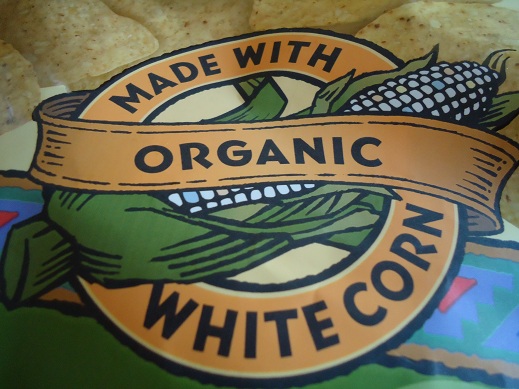
Organic foods are foods that:

  • Are grown or made without synthetic pesticides or chemical fertilizers
  • Do not contain genetically modified organisms (GMOs)
  • Are not processed using irradiation
  • Do not have chemical food additives

Why do I feel like eating organic food is important?

I like knowing that much of my food has been raised in a safe environment. I appreciate that organic farmers are being careful to sustain healthy soil and water. I appreciate that the food I offer my children is less toxic than some non-organic foods. I like knowing that our food is non GMO, as in, our food is real. Genetically modified food is scary and our bodies don’t like it. In addition, I like knowing that my food has not gone through the process of irradiation, which is essentially done to make it last longer on the shelves and to kill bacteria. Ever had fresh vegetables last forever in the fridge without changing colors or getting yucky? Chances are it was irradiated. (Fresh food is supposed to spoil, not last forever in your fridge, by the way.)

Is it worth it to pay more money for organic food?

That depends on what it is, and I’ll talk more about that in the next post. BUT, I guarantee you that raising food organically costs more than raising food conventionally. Therefore, if you trust the provider of your food, and are convinced that you need to eat an organic variety of that particular food, then YES it is usually worth it to pay more for organic food because you are paying for much higher quality food. For instance, I don’t mind paying more for Organically Grown Nuts. We actually visited Braga Farm, our favorite source for organic nuts,  and learned about their practices and saw how they do things. After this tour, their prices seemed completely reasonable to me. We can’t expect someone to work extra hard and not be compensated for it. I also don’t mind paying more for our eggs, meat and milk because I trust the people raising these animals and the quality of the food we get from them is excellent!

When is it NOT worth it to pay more for organic food?

Well, as organic food has become more popular and more “in demand”, I see more and more “organic processed foods”. It’s pretty tough for me to pay $3.75 for a package of six Organic Cookies. Most of these organic processed foods do at least contain better ingredients than their non-organic counterparts, but not always. Just because something has an organic label doesn’t necessarily mean it’s healthy. Healthy-er, maybe. But offering much nourishment? Maybe not. Might it be a fun option for a treat sometime? Sure. But don’t get sucked into buying something just because it’s organic. ;)

Do your homework. Don’t pay more or buy into the “all natural” or “organic” label always being better. There’s this little tool called the internet that is very helpful in researching companies to see what they stand for. Hey, what a great time to use the Swagbuck search engine. :)  Or, if it’s a local farm you’re looking to buy from, ask lots of questions about how they raise their crops and animals before you decide if it’s worth it to pay more for their food.

Coming up next in this series:  Which foods are the most important for organic purchasing (and which ones can I skip)?

Heavenly Homemaker's Club Members: Access your homepage and all your fantastic resources here! Not a member yet? Please join us!

Buy High Quality Shampoo and Still Save Money

March 25, 2011 by Laura 60 Comments

This post may contain affiliate links. For more information, please see our disclosure policy.

I’ve been asked many a time… (Wait, “many a time“? who actually says that phrase?)

Anyway, I am oft asked… (Hahaha, I never say that either. “Oft asked“…eeehehehe)

What I’m trying to say is:

It is not altogether uncommon that I receive frequent inquiries and recurrent requests for me to impart my wisdom in the matter of hair cleansing.

Um, hello. It would appear that I have suddenly turned into a Shampoo Professor with a British accent. You did read all of the above in a British accent, didn’t you?

My apologies for dragging you through that marvelous waste of time. I do have a point and I really am going to share it:

Shampoo. People always want to know what I use in our hair, how healthy it is and how I afford it. So there you go.

I wrote a lengthy post a while ago describing the different soaps and cleaners we usually use around here. When it comes to shampoo, many people prefer to buy the cheapest stuff possible and/or use coupons to get it for free and I completely understand that. I used to do that too. If I found it hard to stop using coupons to buy cheap and unhealthy food…I found it doubly hard to stop using coupons to get free hair care products. Sigh…

But, just like I’ve begun to understand that it’s good and wise to spend money on whole and nourishing food for my family…I’ve also decided that I want to spend money on healthy, non-chemical-filled products for our skin and hair. I do not relish the thought of harmful chemicals seeping into our bodies through our skin, particularly our heads wherein lie our brains. (Eek, Professor Shampoo made a little appearance again. “Wherein lie our brains”, wow.)

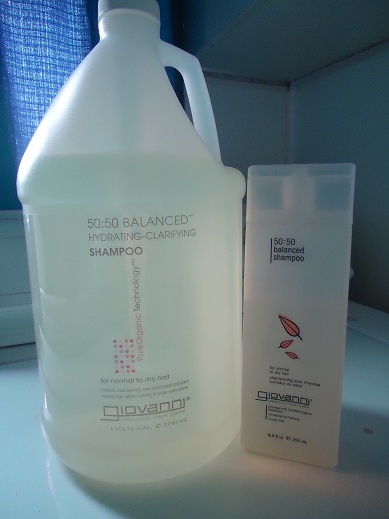
We use only the bar soaps from Tropical Traditions for bathing and are LOVING the MadeOn Lotion Bar for our dry skin. For our hair? We love Giovanni 50/50 Balance Shampoo. We checked it out on the EWG website to see if it was safe. Not only is it safe, it works great!

Is Giovanni 50/50 Balance Shampoo cheap? Nope. Not when you’re used to tossing out coupons to get 26 free bottles of Suave. But I’ve found a way to make our shampoo purchase more affordable AND I have peace of mind, knowing that I’m getting one of the healthiest shampoos on the market. There are no icky chemicals seeping into our heads with Giovanni 50/50 Balance Shampoo!

I used to buy Giovanni 50/50 Balance Shampoo 8-ounce bottles by the case from one of my health food co-ops. It was pricey, but much cheaper than buying a single bottle at a health food store (which would usually be something like $9/bottle!!). But THEN I discovered the beauty of buying a gallon jug of the shampoo from Amazon!! I invested a few dollars in a pump thingy…so that I can use the gallon jug to refill our smaller bottles for use in the shower. 

Now granted, I am the only one with long hair in our family of six (unless you count my 13 year old son who prefers his hair to be down over his ears and into his eyes), so this may not last as long for families who have lots of girls with long hair. BUT, we’ve trained our boys to just use a tiny amount of shampoo because they really don’t need more than a little bit. I’m happy to report that our first gallon jug lasted us well over 18 months!!! 

$3/month isn’t the same as free…but it also isn’t nearly as expensive as a good quality shampoo can appear at first glance. I’m VERY pleased that we’ve been able to get away with spending so little on such quality shampoo!

And that, Ladies and Gentlemen, concludes today’s informational session on what I consider to be a superior product and how I heretofore am able to execute such a purchase in a way that is financially feasible.

In other words…that’s how I buy good shampoo and save money. 

Feel like telling us about the shampoo you use?  You can even use big words if you want to. :)

Heavenly Homemaker's Club Members: Access your homepage and all your fantastic resources here! Not a member yet? Please join us!

Unclog a Drain Naturally Without Bleach or Drano

March 21, 2010 by Laura 36 Comments

This post may contain affiliate links. For more information, please see our disclosure policy.

I’ve mentioned before that our house has a lot of character. (I have to say it that way just in case my house is listening and so that it won’t get its feelings hurt.)

Our house is over a hundred years old, and while we love our house and feel completely blessed to live in such a nice, large house…it does have some crazy weird issues.  (Sounds like the lady of the house too, doesn’t it? Crazy weird issues indeed.)

One of the biggest issues in our house involves the plumbing. You don’t want to know the details, but let’s just say… No. Let’s not. You don’t want to know the details.

What I will tell you is that keeping our sinks and bathtubs draining nicely feels next to impossible. And as you know, we’d like to keep our house free from harmful chemicals like bleach and drano.

A good friend of ours was over recently and told us a nice tip for unclogging the bathtubs and sinks naturally using the ever wonderful baking soda and vinegar.

Here’s what you do:

  1. Take out your sink or bathtub stopper.
  2. Use an wet washrag to clean out around the drain hole.
  3. Pour 1/2 cup of baking soda down the drain.
  4. Pour 1 cup white distilled vinegar down the drain.
  5. Stop the volcano from bubbling up out of the drain by placing a wash rag over the drain hole. You want the action to take place down where stuff is clogged, not all over your bathtub or sink.
  6. After thirty minutes, pour a big pot of boiling water down the drain.

And there you go.

I love that we can work on our drain issues using natural ingredients…thus avoiding an asthma attack and whatever other icky things we’re avoiding when we skip using bleach and other harmful chemicals in our home. And, as a side benefit…this method saves a lot of money. Do you know how expensive drano is?!

What other great uses have you found for baking soda and vinegar?

I wonder if they would help with the… Oh wait. We weren’t going to talk about that.

Heavenly Homemaker's Club Members: Access your homepage and all your fantastic resources here! Not a member yet? Please join us!

Join Our Community!

 Facebook Twitter E-mail Instagram Pinterest

Popular Posts

~ Will All of the Real Moms Please Stand Up?
~ Easy! Stir-and-Pour Whole Wheat Bread
~ How to Make Gatorade
~ 31 Real Food Breakfast Ideas
~ Dear Teenage Girls...
~ When Mom Takes a Step Back
~ The Inexpensive Health Insurance We Love!
~ Let's Talk Real Food Grocery Budgets

Check out our latest posts!

  • Big Family Food and Fun: April 19-25, 2026
  • Big Family Food and Fun: April 12-18, 2026
  • Big Family Food and Fun: April 5-11, 2026
  • Big Family Food and Fun: March 29-April 4, 2026
  • My 2026 NON-Grocery Budget Update
Home  ~  Simple Meals  ~  Club Membership  ~  Shop  ~  Privacy Policy  ~  Disclosure  ~ Contact

Copyright © 2026 · Beautiful Pro Theme on Genesis Framework · WordPress · Log in