I used to make these bagels all the time…then I guess I forgot about them. Recently the boys asked, “WHEN are you going to make those yummy bagels again?!” (I think they ended the sentence with “oh our Beautiful Mother Dearest” or something like that.)
Funny how you can completely forget about a particular recipe for a while. I made the requested bagels again last weekend and I think I made quite a few little men (and one tall one) very happy. Wow, is that all it takes?
Making bagels takes a few different steps…but they aren’t hard steps. You mix, rest, shape, broil, boil, and bake. I kinda think it’s fun to say “broil your bagels”, but then again, I don’t get out much.
Honey Whole Wheat Bagels
4 to 4 1/2 cups whole wheat flour (I use freshly ground flour from hard white wheat)
1 pkg yeast (2 1/4 teaspoons)
1 1/2 cups warm water (if you put your finger in and it hurts, it’s too hot and will kill your yeast)
3 Tablespoons honey + 1 Tablespoon honey
1 teaspoon sea salt
Stir together 2 cups of the flour, the salt and the yeast. Add in the warm water and 3 Tablespoons honey. Gradually add in the remaining flour.
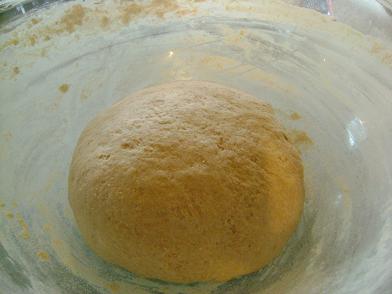
Dump it out and knead the flour in until the dough is smooth and elastic.
Cover the dough and let it take a nap for about 10 minutes. (zzzz)
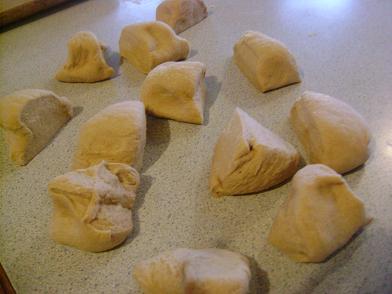
Divide the dough into twelve equal parts.
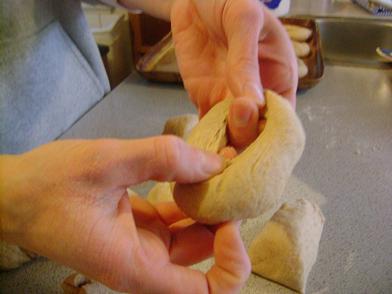
Set a timer for 20 minutes. Begin shaping each piece of dough into a nice ball. Stick your finger in the middle of the ball and pull it apart to create about a 2 inch hole.
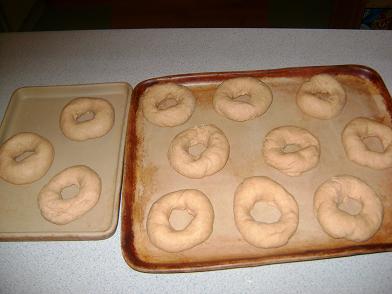
Lay it onto a buttered cookie sheet or baking stone.
Continue until all the bagels are formed. Let them sit until your timer goes off.
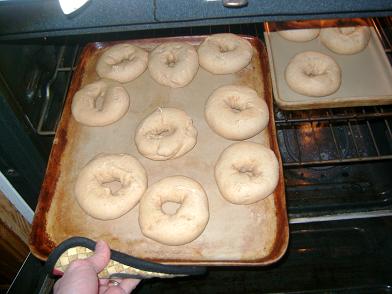
After your 20 minute timer goes off, turn the broiler on in your oven.
Broil your bagels for 2 minutes on each side.
Meanwhile…bring a big pot of water to a boil. Stir in the remaining 1 T. honey.
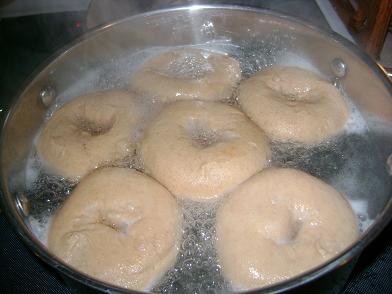
Put 4-6 bagels into the water, turn down the heat and
simmer for seven minutes, turning the bagels over once during that time.
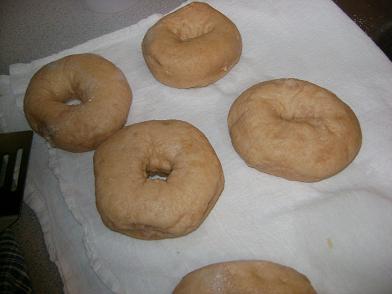
Continue to boil your bagels until they are all done.
Let them drain on a towel for 1-2 minutes.
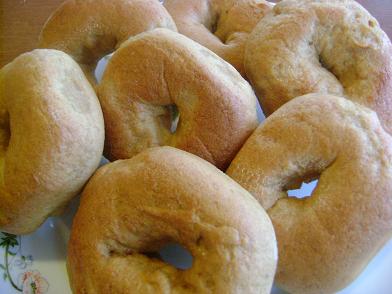
Bake at 375 ° for 25-30 minutes or until the tops are golden brown.
Slice these, toast them, then slather them with butter or cream cheese for breakfast….oh my goodness.
Now I want to experiment with cinnamon raisin or blueberry bagels…and what other flavors can you think of?
Okay, answer me this….is it fun to say “broil your bagels” or is it just me? Yeah, you know you love it.
———————————————-
This post is linked to Frugal Fridays.