Who knew making homemade mayonnaise for the Heavenly Homemakers Recipe Challenge would tempt me to say naughty words? I held myself back though, and merely gave dirty looks to the ingredients in my blender that were not even trying to become mayonnaise and through gritted teeth hissed, “Would you guys emulsify already!?!?!?”
It wouldn’t have been such a big deal, except that I attempted to make mayonnaise at least four times before I could accomplish “mayonnaise emulsification”. We went through a lot of olive oil in the process, and subsequently, a lot of tuna.
Why tuna? Well, I wasn’t going to waste all those ingredients every time I had mayonnaise emulsification failure. Instead, each time, I stirred the runny, stubborn ingredients into a few cans of tuna, added some of my home canned pickle relish and called it lunch. It worked, all but one time. Yes, there was one time I did have to throw the ingredients out. That was the time I was so determined to whip the ingredients long enough and hard enough to become mayonnaise that the ingredients got so hot inside my food processor that the eggs got cooked, causing scrambled eggs to float in my olive oil. Mmmm. Gross as it is, I just had to take a picture – because I’m weird like that:
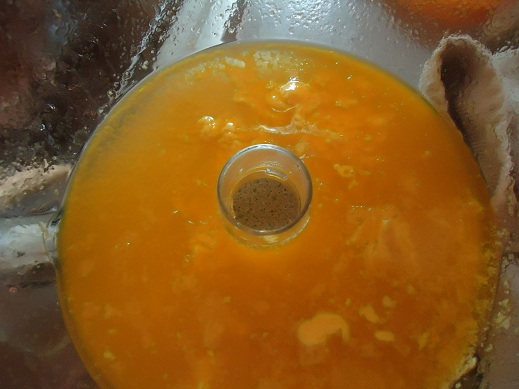
A perfect example of what not to do.
Regarding a healthy mayonnaise recipe, I do have one to share with you, and I’m sure that after all my previous, inspirational statements, you’re all ready to jump right in and give this a go. Based on all my trial and error, I have a few tips I think you’ll find helpful.
- I believe that if I had an immersion blender, this process would work much better. But I don’t have one and I refuse to buy one just to make mayo. If you do have an immersion blender, save yourself some frustration and use it for this.
- Pour the oil into the running blender so slowly you think you might fall asleep while pouring. About the time you think you’re pouring slowly enough, slow down. Slow dripping oil is key for making mayonnaise.
- Get your eggs at room temperature before starting this process.
Homemade Mayonnaise
2 egg yolks
1/2 teaspoon sea salt
1 Tablespoon vinegar
1 teaspoon sucanat
1/2 cup olive oil
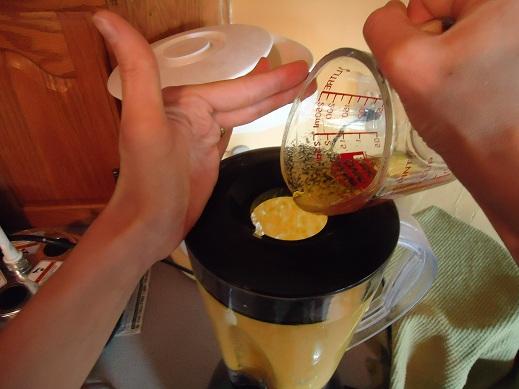
Place the egg yolks, salt, vinegar and sucanat into a blender and run on high speed for about a minute. S-l-o-w-l-y pour the oil in while the blender is running. I’m talking, let the oil drip into the running blender at a horridly boring pace. Just stand there, with the blender running, dripping oil for several minutes. Don’t get impatient or you’ll be making tuna.
My mayo turned out very yellow in color because of our lovely free-range chicken eggs, which are rich with nutrients.
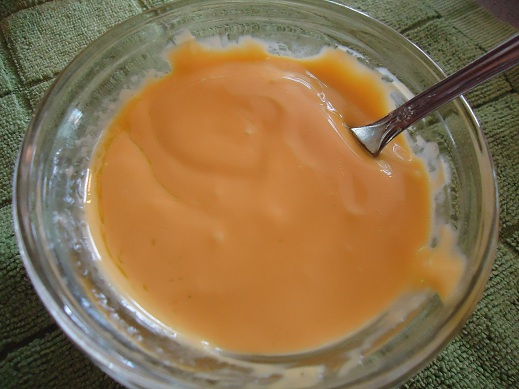
This mayonnaise did taste very good, as well it should have after all the work it took to figure out how to make it. But I will never be known as the Mayonnaise Queen, nor will I ever be asked to speak at the Heart of Mayonnaise Convention. I’m also pretty sure I shouldn’t be your “I’m having trouble making mayonnaise” questions go-to gal. I do not believe making mayonnaise is my gift, nor do I wish to become a professional mayonnaise maker.
But, I am pleased to say that I figured out a healthy mayonnaise recipe and now I can move on to try and conquer the remaining recipes in the Heavenly Homemakers Recipe Challenge.
Have you conquered mayonnaise before? What’s your favorite use for mayonnaise? Ever given your mayonnaise dirty looks?





 , finding that they make a world of difference in my “